
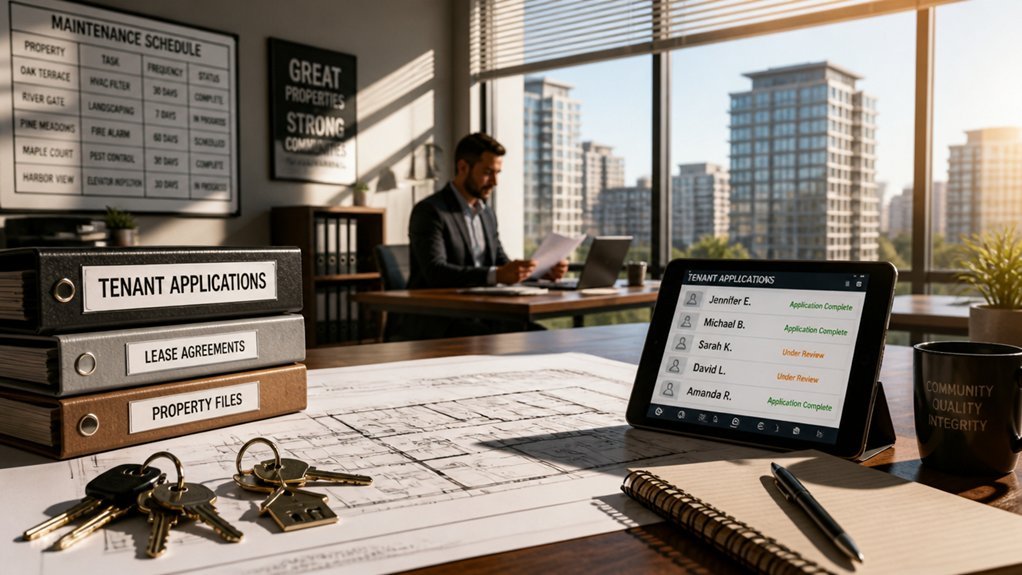
Managing rental properties involves far more than simply collecting checks each month. A property management company steps in to handle the day-to-day complexities that many landlords find overwhelming. From finding qualified tenants to coordinating emergency repairs at odd hours, these firms serve as the operational backbone of rental real estate.
Tenant screening represents one of their most valuable services. Rather than relying on gut instinct, managers run background checks, verify employment, and contact previous landlords to reduce turnover risk. They also handle the delicate conversations when rent arrives late and mediate conflicts between neighbors before small issues escalate into larger problems.
Legal compliance keeps many property owners awake at night, and for good reason. Management companies stay current on evolving housing regulations, manage security deposits according to state laws, and navigate eviction proceedings when necessary. They maintain meticulous financial records and generate performance reports that help owners understand whether their investments are truly profitable.
What Property Managers Handle: Core Responsibilities

Property managers oversee the day-to-day operations of rental properties, handling tasks that keep buildings functioning and tenants satisfied. They collect rent payments, process lease agreements, and handle tenant communications.
Maintenance coordination falls under their responsibilities, including scheduling repairs for broken appliances, plumbing issues, and HVAC systems. Property managers also conduct property inspections, address tenant complaints, and enforce lease terms.
They manage budgets, track expenses, and arrange necessary services like landscaping and cleaning. Additionally, they handle tenant screening, document lease violations, and coordinate evictions when necessary.
These duties guarantee properties remain profitable and well-maintained.
Screening Tenants and Filling Vacancies
Filling rental vacancies quickly requires property managers to identify and evaluate qualified candidates through a structured screening process. Managers post listings on multiple platforms, including Zillow, Apartments.com, and local websites, to reach potential tenants.
They collect applications, verify employment history, check credit scores, and contact previous landlords for references. Background checks reveal criminal records and eviction history.
Property managers compare applicants against established criteria, such as income requirements and rental history quality. This systematic approach reduces vacancy periods, minimizes risk of problem tenants, and protects property owners from financial losses and property damage.
Collecting Rent and Managing Finances
Rent collection forms a core responsibility of property management, requiring managers to establish payment systems, track incoming funds, and handle late payments. Property managers set up online portals, bank transfers, or check processing to receive tenant payments efficiently.
They maintain detailed financial records, reconcile accounts, and generate monthly reports for property owners. Managers enforce lease terms by issuing late notices, calculating penalties, and pursuing collections when necessary.
Beyond rent collection, they budget for maintenance costs, insurance, property taxes, and utilities. Financial management includes separating owner funds from operational accounts and ensuring compliance with legal requirements governing tenant deposits and escrow accounts.
Handling Maintenance and 2 A.M. Emergencies
Maintaining properties and responding to emergencies represent essential functions that property managers perform around the clock. They coordinate repairs for broken pipes, leaking roofs, faulty electrical systems, and malfunctioning HVAC units. Property managers arrange inspections, hire contractors, and monitor work quality to guarantee code compliance.
Emergency calls arriving at 2 A.M. for burst water heaters or gas leaks require immediate attention and professional response. Managers maintain vendor relationships with plumbers, electricians, and emergency services.
They document all maintenance issues, track expenses, and confirm repairs meet safety standards. This proactive approach prevents small problems from becoming costly property damage requiring extensive remediation.
Evictions and Legal Compliance
Beyond emergency repairs and routine maintenance, property managers navigate the complex legal landscape of tenant relations and property regulations. They handle eviction processes, which involve documentation, notice periods, and court filings according to state law.
Property managers guarantee compliance with fair housing regulations, lease agreements, and local housing codes. They manage security deposits, maintain required disclosures, and handle tenant disputes professionally.
Property managers stay current on changing regulations regarding rent control, habitability standards, and tenant rights. This legal expertise protects property owners from violations and costly lawsuits while guaranteeing fair treatment of tenants.
Protecting Your Security Deposits
Security deposits represent a significant financial responsibility for property managers, requiring careful handling and precise documentation. Property managers maintain separate accounts, segregating tenant deposits from operating funds, ensuring compliance with state laws.
They document the property’s initial condition through photographs, video recordings, and written inspections before tenants move in. Upon lease termination, managers conduct move-out inspections, comparing conditions against baseline documentation.
Legitimate deductions cover unpaid rent, damage beyond normal wear, and cleaning costs. Managers provide itemized statements detailing deductions, returning remaining funds within legally mandated timeframes, typically 30 to 45 days.
Proper procedures prevent disputes, protect landlords from liability, and maintain tenant trust.
Tracking Performance and Your Bottom Line
Throughout each rental period, property managers monitor financial metrics and operational efficiency to assess investment performance. They track rental income, vacancy rates, maintenance costs, and tenant turnover to identify trends affecting profitability.
Detailed reports show monthly revenue, expenses, and net returns on investment properties. Managers compare actual performance against budgeted projections, highlighting discrepancies requiring attention. They analyze which properties generate strong returns, which require cost reduction, and where improvements might increase value.
Regular financial statements enable property owners to understand their investment’s health, make informed decisions about future purchases or sales, and adjust strategies accordingly.
Frequently Asked Questions
How Much Do Property Management Companies Typically Charge for Their Services?
Property management companies typically charge between 8-12% of monthly rental income, though rates vary by location and services provided. Some firms charge flat fees ranging from $300-$1,500 monthly instead of percentage-based models.
Can Property Managers Help With Property Renovations or Major Upgrades?
Property managers often facilitate the journey of property enhancement and structural refinement. Yes, they coordinate renovations and upgrades by managing contractors, obtaining permits, overseeing budgets, and ensuring quality standards are maintained throughout the improvement process.
What Technology Platforms Do Property Managers Use for Tenant Communication?
Property managers utilize various technology platforms for tenant communication, including resident portals, email systems, text messaging services, and dedicated mobile applications. These tools enable efficient scheduling, maintenance requests, rent payment processing, and emergency notifications.
Do Property Managers Handle Marketing and Advertising Rental Properties?
Ironically, while property owners hire managers to reduce their workload, managers ironically generate more work by handling extensive marketing duties. They strategically advertise rental properties through online listings, social media, photography, and targeted campaigns to attract qualified tenants efficiently.
How Do Property Managers Handle Disputes Between Tenants and Owners?
Property managers mediate conflicts by documenting grievances, reviewing lease agreements, and facilitating communication between parties. They enforce lease terms, coordinate repairs or resolutions, and escalate issues to legal counsel when necessary to protect both tenant and owner interests.
Conclusion
Property management companies serve as the backbone holding rental operations together. They handle tenant screening, rent collection, maintenance coordination, legal compliance, and financial tracking. Like a conductor orchestrating multiple instruments, managers balance owner interests, tenant needs, and regulatory requirements simultaneously. Their thorough approach transforms property ownership from a demanding, time-consuming burden into a manageable investment. Ultimately, property managers deliver operational stability and financial protection.