
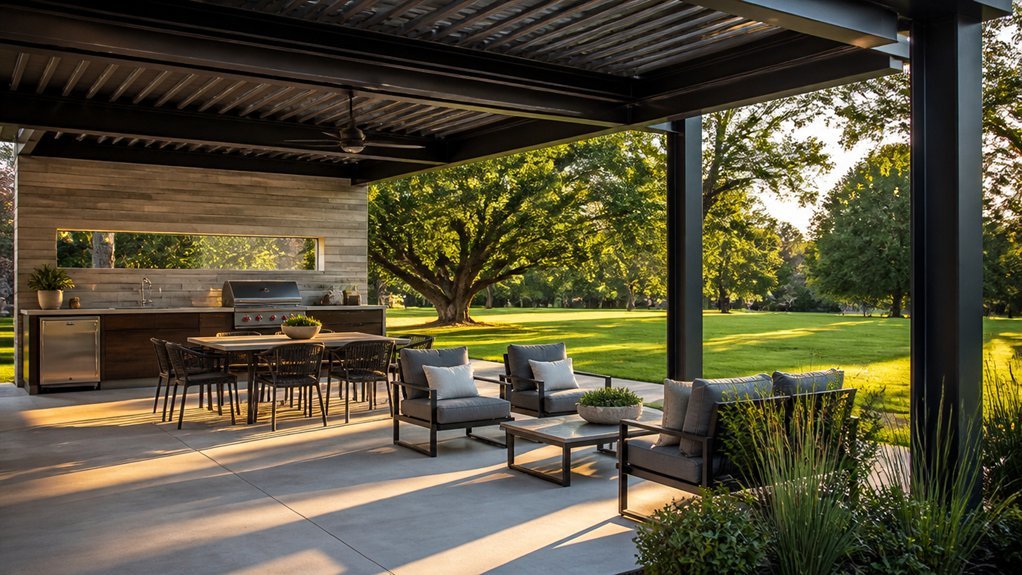
A backyard pavilion typically returns 50 to 75% of its construction costs once an investment property sells. Basic wooden structures add roughly $2,500 to $3,750 in value, while premium designs often recover even more. This makes pavilions a moderately reliable upgrade, though not a guaranteed profit center.
Demand runs highest in warm-climate regions where outdoor living extends through most of the year. Middle to upper-income buyers also show stronger interest, viewing covered spaces as extensions of usable square footage. These preferences shape where pavilions perform best and who responds to them most favorably.
Not every installation delivers equal returns, however. Tenant preferences vary significantly, and regional markets respond differently to outdoor amenities. Maintenance costs can quietly erode gains over time, especially with wood that needs regular sealing or repair.
Specific design choices ultimately determine whether a pavilion adds genuine value. Size, materials, placement, and how well the structure complements existing architecture all require careful evaluation before breaking ground. Skipping this analysis risks building something tenants enjoy but buyers barely notice.
How Much Value Does a Backyard Pavilion Actually Add?
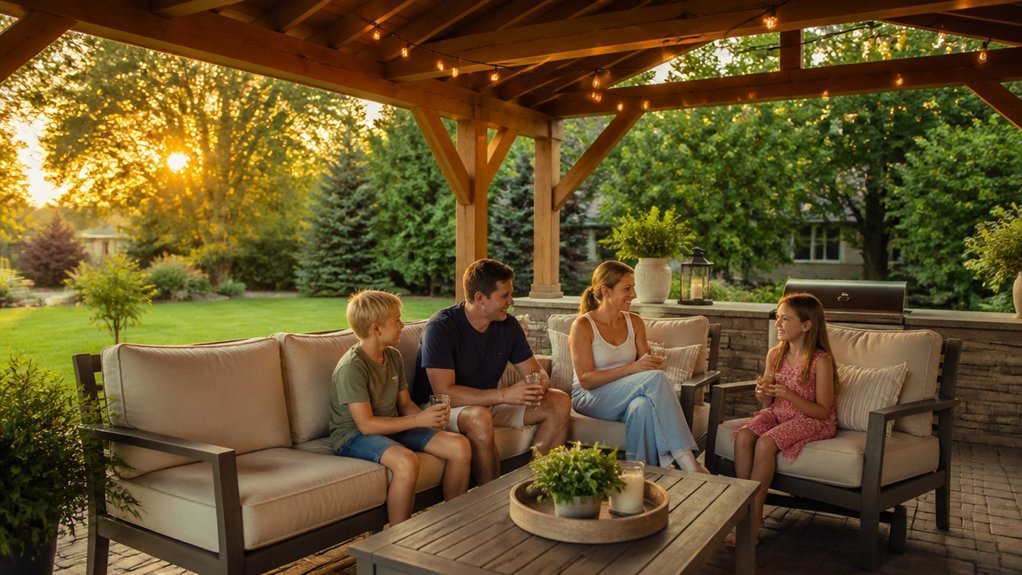
When homeowners consider adding a backyard pavilion, the question of return on investment becomes central to their decision. Studies indicate that pavilions typically return 50 to 75 percent of construction costs at resale. A basic wooden pavilion costing $5,000 might add $2,500 to $3,750 in property value.
High-end structures, featuring electrical wiring, ceiling fans, and quality materials, recover a larger percentage. The actual value depends on local real estate markets, neighborhood standards, and pavilion quality. Appraisers evaluate pavilion construction methods, materials used, and overall condition.
Homebuyers in suburban areas particularly value outdoor structures, making regional location a significant factor in determining final property value increases.
What Tenant Types and Markets Demand Pavilions?
Understanding which buyer demographics and geographic markets show strong interest in backyard pavilions helps homeowners make informed decisions about construction investments.
Families with children, particularly those in suburban areas, value outdoor entertaining spaces. Southern and warm-climate regions demonstrate higher demand due to extended outdoor seasons. Middle to upper-income households show greater interest than lower-income demographics.
Properties in neighborhoods with established entertaining cultures, near golf communities, or in resort-adjacent areas attract buyers seeking pavilions. Rental markets catering to event hosting or vacation properties benefit most.
Markets experiencing population growth and younger demographic shifts indicate stronger pavilion demand potential.
Which Pavilion Features Maximize ROI?
Specific structural and functional elements directly influence a pavilion’s ability to increase property value and appeal to potential buyers.
Features including electrical outlets, ceiling fans, and built-in lighting substantially enhance usability and attractiveness. Durable roofing materials, such as metal or composite shingles, reduce maintenance concerns for future owners.
Concrete or composite flooring provides better longevity than gravel bases. Integrated seating, storage benches, and grilling areas maximize functional appeal. Proper drainage systems prevent water damage and pooling issues.
Pavilions with multiple support posts and weather-resistant construction command higher valuations. These practical improvements directly correlate with increased property desirability and measurable return on investment.
What Will Your Pavilion Cost to Build and Maintain?
Building a pavilion requires careful budget planning, as costs vary markedly based on size, materials, and desired features.
Basic wooden structures typically cost $3,000 to $8,000, while vinyl or metal pavilions range from $5,000 to $15,000. Installation expenses add $1,500 to $3,000.
Annual maintenance includes roof repairs, wood treatment, and structural inspections, averaging $300 to $800 yearly.
Electrical additions for lighting or outlets increase initial costs by $1,000 to $2,500.
Property owners should budget for occasional replacements of damaged boards, roofing materials, and fasteners over the pavilion’s 15 to 20-year lifespan.
Pavilion Liability and Ongoing Ownership Costs
Beyond initial construction and annual maintenance, pavilion owners face additional financial responsibilities related to liability and property management. Property owners need liability insurance coverage, protecting against injuries or property damage occurring at the pavilion. Annual premiums vary based on structure size, location, and usage frequency, typically ranging from $200 to $500 yearly.
Owners must also budget for permits, inspections, and potential code violations. Additionally, regular upkeep of electrical systems, roofing, and safety features prevents costly repairs.
These ongoing expenses greatly impact overall return on investment, making careful financial planning essential before construction begins.
Why Pavilions Disappoint: Building the Wrong Amenity for Your Renters
Why do property owners frequently discover that pavilions fail to attract renters or generate expected rental income? Many renters prioritize different amenities. Young families want playgrounds, pools, or updated kitchens. Working professionals prefer fast internet, parking spaces, or gyms. Older tenants seek accessibility features and quiet spaces. A pavilion addresses none of these needs directly.
Additionally, renters rarely use outdoor structures during winter months or bad weather.
Maintenance visibility matters too: a deteriorating pavilion signals neglect, discouraging applications.
Property owners should survey their target demographic first, identifying what amenities actually drive rental decisions and occupancy rates before investing substantially.
Is a Backyard Pavilion Right for Your Investment?
Before committing capital to a pavilion project, property owners should evaluate whether this amenity aligns with their rental market, target tenant profile, and financial goals.
Consider the local demand: suburban family rentals may benefit from pavilions, while urban apartments or commercial properties rarely justify the investment. Assess tenant preferences through comparable properties and rental surveys.
Calculate expected ROI by comparing construction costs against potential rent increases.
For properties in regions with short outdoor seasons or high maintenance climates, pavilions present reduced value. Property owners must match amenities to specific market conditions, not assume universal appeal across all investment types and locations.
Frequently Asked Questions
Do Pavilions Require Building Permits and What Are Typical Approval Timelines?
Most jurisdictions require building permits for pavilions, though requirements vary by location and structure size. Approval timelines typically range from two to eight weeks, depending on local building department workload and project complexity.
How Does a Pavilion Impact Property Insurance Premiums for Rental Properties?
Adding a pavilion typically increases premiums by 5-15%, similar to how installing a pool raises risk exposure. Insurers view additional structures as increased liability and property damage exposure, requiring higher coverage for rental properties with guest access.
Can Pavilions Be Removed or Relocated if Rental Market Demands Change?
Yes, pavilions can be removed or relocated if market demands shift. Permanent structures require deconstruction costs, while freestanding designs offer easier relocation options. Property owners should evaluate construction type and foundation before making decisions.
What Financing Options Are Available Specifically for Backyard Pavilion Construction Projects?
Like seeds planted for future harvests, pavilion financing grows through multiple channels. Homeowners typically access home equity loans, home equity lines of credit, personal loans, construction loans, or cash-out refinancing to fund backyard pavilion projects efficiently.
How Do Pavilions Affect Property Tax Assessments in Different States or Counties?
Pavilion tax implications vary considerably by jurisdiction. Some counties classify permanent structures as taxable improvements, increasing assessed value and property taxes. Others exempt certain pavilion types. Property owners should consult local assessors to understand specific regulations before construction.
Conclusion
A backyard pavilion functions as a bridge connecting property investment and buyer appeal. Like a lighthouse guides ships, a well-chosen pavilion directs the right tenants toward the property. Success requires matching pavilion style to market demand, climate conditions, and tenant income levels. When properly aligned with these factors, pavilions recover 50 to 75 percent of construction costs, making them viable amenities for investment properties in warm regions serving middle to upper-income households.