
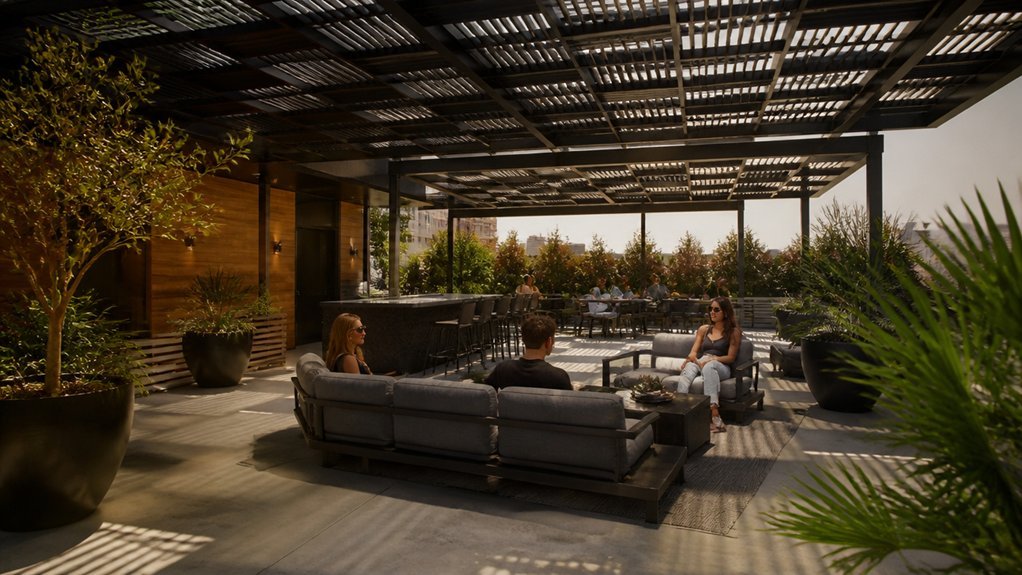
Covered outdoor spaces solve a problem every renter has faced at some point. Rain, snow, and harsh sunlight can make traditional apartment balconies and courtyards unusable for months at a time. A thoughtfully designed covered patio, pergola, or pavilion changes that equation entirely.
Tenants increasingly factor these amenities into their leasing decisions. They picture themselves working remotely under a shaded structure or hosting friends without checking the forecast first. The presence of usable outdoor space often tips the scales during competitive apartment searches.
Not all covered spaces succeed equally, though. Material selection matters: durable fabrics, weather-resistant woods, or sleek metals each send different signals about quality. Layout and sight lines determine whether residents feel connected to the community or isolated in a forgotten corner.
Ultimately, the details separate spaces that hum with activity from those that gather dust. Visibility from units and common areas encourages spontaneous use. Comfortable furnishings and flexible seating arrangements invite people to linger. Property managers who invest in these elements see returns in both occupancy rates and resident satisfaction.
Why Tenants Love Spaces They Can Use All Year
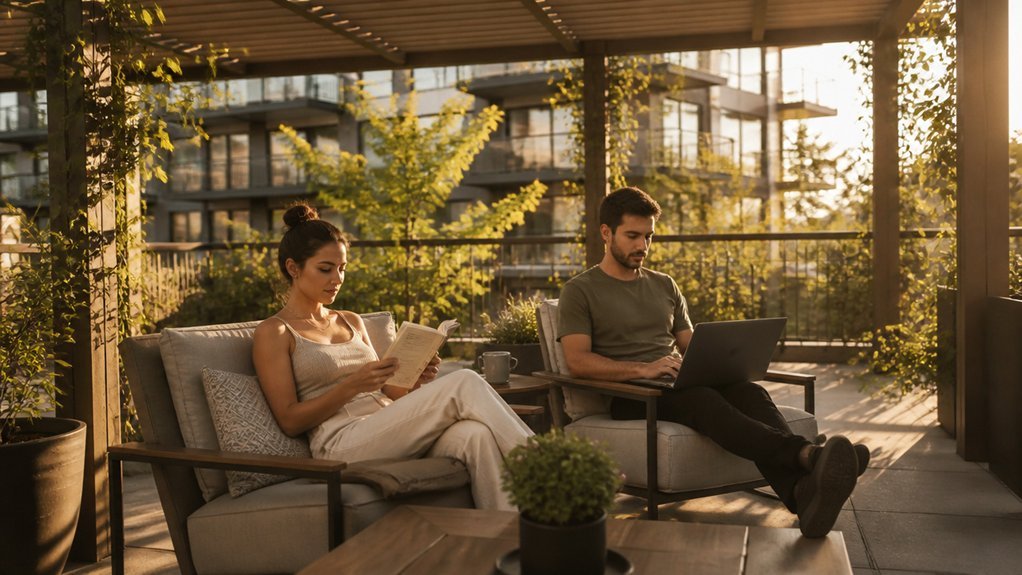
Because weather conditions change throughout the year, tenants benefit greatly from covered outdoor spaces that remain functional in rain, snow, and intense sun.
These areas extend usability across seasons, allowing residents to enjoy patios, courtyards, and walkways regardless of weather patterns. Covered structures protect furniture, grills, and recreational equipment from damage.
Tenants can gather for events, exercise, or relaxation without weather interruptions. Properties offering covered outdoor amenities report higher satisfaction scores and improved retention rates.
Pergolas, awnings, and pavilions provide cost-effective solutions.
Well-designed covered spaces increase property value and distinguish buildings from competitors in competitive markets.
The Mental Health Benefits of Covered Outdoor Spaces
While outdoor environments typically support mental wellness, covered structures amplify these benefits by removing weather barriers to regular use.
Tenants experience reduced stress and improved mood when accessing fresh air during rain, snow, or intense sunlight.
Covered patios, gazebos, and walkways encourage consistent outdoor time throughout seasons, which research links to lower anxiety levels and better sleep patterns.
Regular exposure to natural light and outdoor air, even under protective structures, supports vitamin D production and circadian rhythm regulation.
These spaces become reliable wellness resources, allowing tenants to maintain mental health practices year-round without weather-related disruptions.
Building Community in Covered Outdoor Areas
Covered outdoor areas serve as gathering spaces where tenants naturally encounter one another, fostering informal interactions that build community bonds. These spaces encourage residents to spend time outside, participate in casual conversations, and develop familiarity with neighbors.
Benches, tables, and seating arrangements facilitate gatherings for coffee, meals, or relaxation. Property managers can organize scheduled activities like community dinners, game nights, or fitness classes in these areas. Regular use strengthens social connections among residents.
Improved lighting, weather protection, and comfortable furnishings make spaces more inviting.
Community bulletin boards and signage promote awareness of events and resident initiatives, supporting ongoing social engagement and neighborhood cohesion.
How Covered Spaces Help You Attract and Keep Tenants
Quality outdoor amenities directly influence tenant decisions during apartment searches and affect lease renewal rates. Covered spaces provide functional benefits that address practical concerns: protection from weather, usable year-round areas, and designated social zones.
Prospective tenants view these amenities as valuable features, comparing properties based on outdoor quality. Properties offering covered patios, pergolas, or pavilions report higher occupancy rates and reduced turnover.
Retention improves when current residents enjoy accessible outdoor spaces for gathering, relaxation, and activities. Covered areas also reduce maintenance complaints related to weather exposure.
Marketing these amenities effectively highlights competitive advantages, supporting both attraction and retention goals for multifamily communities.
What Drives Usage: Layout, Materials, and Sightlines That Work
How do property managers guarantee tenants actually use covered outdoor spaces rather than simply pass by them?
Strategic layout proves essential, requiring clear sightlines from building entrances and main pathways.
Materials matter remarkably, with durable concrete or permeable pavers supporting furniture placement and foot traffic.
Open designs without obstructing columns encourage movement and visibility.
Seating arrangements should face activity zones, promoting social interaction.
Adequate lighting extends usability into evening hours.
Positioning near amenities like coffee stations or bike storage increases foot traffic naturally.
Strategic tree placement provides shade without blocking views.
These combined elements transform underused spaces into functional gathering areas tenants genuinely frequent.
ROI Breakdown: Property Value and Rental Rate Impact
Strategic outdoor spaces deliver measurable financial returns, influencing both property valuation and rental income.
Properties featuring covered patios, pergolas, and lounges command rental premiums of 5-12% compared to similar units lacking these amenities.
Appraisers factor usable outdoor square footage into property assessments, directly increasing market value. Tenant retention improves substantially when covered spaces provide weather protection and functional gathering areas.
Mixed-use developments with integrated outdoor seating, shade structures, and defined zones attract premium-paying renters.
Operational costs remain minimal once installed, creating favorable long-term margins.
Market data demonstrates that properties investing in covered outdoor infrastructure experience faster lease-up periods and reduced vacancy rates, translating to accelerated return timelines.
Costly Mistakes to Avoid Before You Build
Why do many property developers proceed with outdoor construction plans that fail to deliver expected returns?
Common errors include underestimating maintenance costs, ignoring local climate conditions, and skipping tenant preference surveys.
Developers frequently overlook building codes, drainage requirements, and permits, creating costly delays.
Poor material selection leads to premature deterioration. Inadequate budget allocation for furniture, lighting, and landscaping diminishes usability.
Failing to assess foot traffic patterns results in poorly positioned amenities. Overlooking accessibility standards invites liability issues.
Insufficient weather protection design reduces seasonal usage. Not consulting architects about structural integrity causes expensive retrofits.
These oversights transform promising projects into financial burdens requiring substantial corrections.
Frequently Asked Questions
What Are the Typical Construction Costs and Timeline for Building a Covered Outdoor Space?
Covered outdoor space construction typically costs $50-$150 per square foot, depending on materials and complexity. Timeline generally ranges from three to six months, accounting for design, permitting, and installation phases.
Do Covered Outdoor Spaces Require Special Permits or Zoning Approvals Before Construction?
Yes, covered outdoor spaces require permits and zoning approvals, though requirements vary by location. While some municipalities streamline the process for minor structures, others demand extensive environmental and architectural reviews. Property owners must consult local building departments before proceeding with construction plans.
How Much Maintenance Is Needed Annually for Covered Outdoor Structures and Materials?
Covered outdoor structures typically require annual maintenance including roof inspections, gutter cleaning, structural assessments, and material repairs. Maintenance costs vary based on materials used—wood demands more attention than metal or composite options. Regular upkeep prevents costly deterioration.
What Insurance Considerations Should Property Owners Have for Covered Outdoor Tenant Spaces?
Property owners should guarantee extensive liability coverage for covered outdoor spaces, including slip-and-fall protection, weather damage provisions, and structural failure coverage. They must verify that policies adequately protect against tenant-related incidents occurring within these areas.
Can Covered Outdoor Spaces Be Designed to Accommodate Wheelchair Accessibility and ADA Requirements?
Like a bridge spanning divides, covered outdoor spaces can indeed be designed to meet ADA requirements. Ramps, accessible pathways, accessible seating areas, and appropriate surface materials guarantee all tenants, regardless of mobility status, can fully utilize these communal environments.
Conclusion
Covered outdoor spaces represent more than amenities; they function as investments in tenant retention and property value. Landlords who prioritize thoughtful design, strategic sightlines, and durable materials create environments that drive consistent usage year-round. The financial returns—higher rental rates, reduced vacancy, improved satisfaction—follow naturally from spaces that work functionally and aesthetically. Success requires avoiding common construction mistakes and understanding how layout influences community engagement and mental health outcomes.